eSIM vs Physical SIM for Europe: The Complete Traveller’s Comparison Guide
Why Your SIM Choice Matters More Than You Think
You’ve booked your flights, reserved your hotels, and mapped out a loose itinerary across three European countries. Then it hits you: how are you actually going to stay connected? Reliable mobile data shapes every part of a modern trip — from pulling up boarding passes at the gate to navigating a winding street in Porto at midnight. The decision between an eSIM and a traditional physical SIM card is no longer a niche tech question. It’s one of the most practical choices you’ll make before departure.
This guide breaks down the two options across every dimension that matters to a traveller — activation speed, pricing, network coverage, roaming across borders, device compatibility, and the small annoyances nobody warns you about. By the end, you’ll know exactly which solution fits your trip, your phone, and your budget.
TL;DR — Quick Verdict
If your phone supports eSIM (most devices released after 2020 do), an eSIM wins for European travel on almost every front: instant activation, multi-country roaming without swapping cards, competitive pricing, and zero risk of losing a tiny piece of plastic in an airport lounge. Physical SIMs still make sense for older devices or travellers who want a local phone number from a street-level shop. For most people heading to Europe, though, the eSIM is the smarter pick — especially when you grab a europe esim with number that covers dozens of countries on a single plan.
What Exactly Is an eSIM?
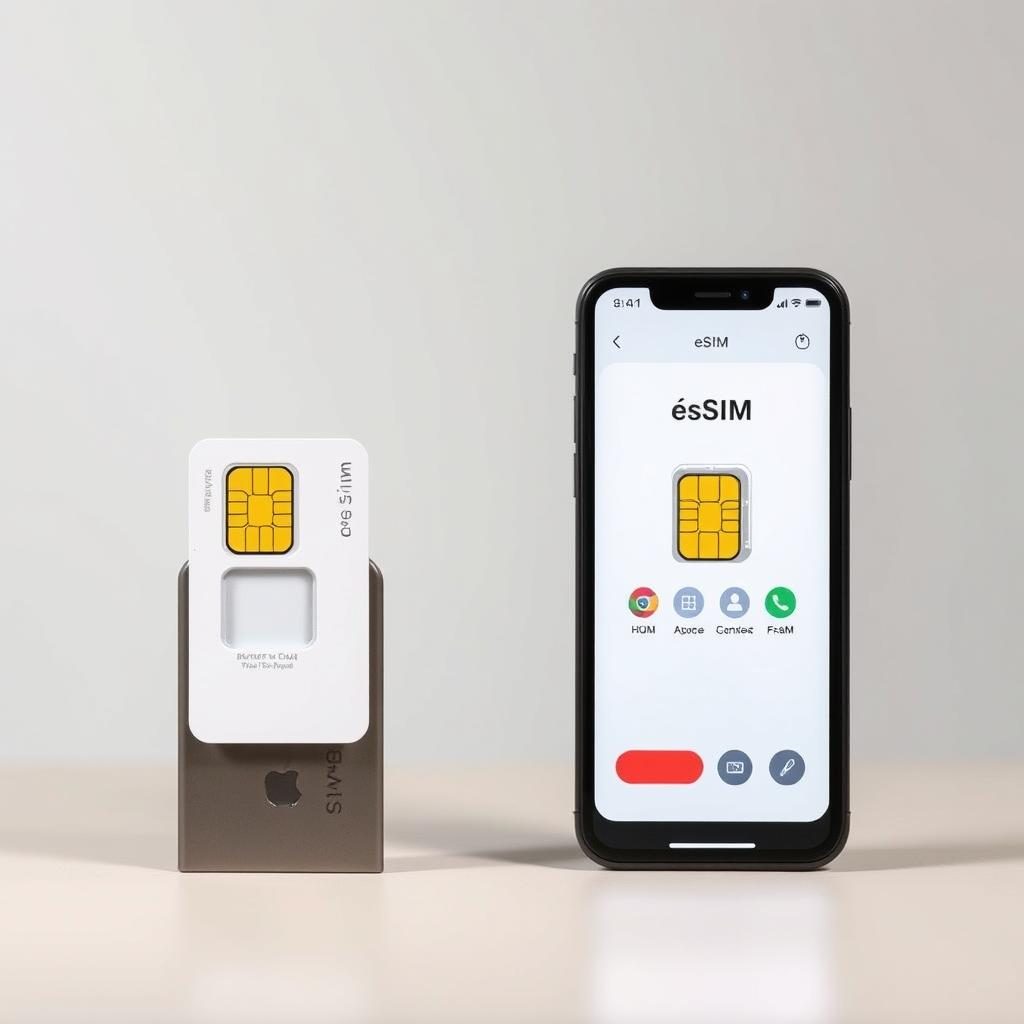
An eSIM (embedded SIM) is a small chip soldered directly onto your phone’s motherboard during manufacturing. Instead of popping open a tray and sliding in a card, you download a carrier profile digitally — usually by scanning a QR code or tapping a link. The phone activates the plan within minutes, sometimes seconds.
The technology follows the same GSMA standard that governs traditional SIM cards, so the underlying network authentication is identical. The difference is entirely in the form factor and delivery method. You’re not getting a lesser service; you’re getting the same connectivity minus the physical logistics.
How Physical SIMs Work (And Where They Fall Short for Travel)
Physical SIM cards have served us well for decades. You buy one at an airport kiosk, a convenience store, or a carrier’s retail outlet. You swap it into your phone, enter any required PIN, and connect. Simple enough — until the friction points stack up during a multi-country European trip.
First, there’s the procurement delay. Depending on your arrival time, airport SIM shops may be closed. Many require passport verification under EU telecom regulations, which can mean queuing for 20 minutes after a long flight. Second, if your plan only covers one country — say, France — crossing into Spain or Italy might trigger expensive roaming charges or force you to buy another card entirely. Third, you need somewhere safe to store your home SIM while the travel SIM is in the tray, and losing that home SIM can be a genuine headache.
Head-to-Head Comparison: Seven Categories That Matter
1. Activation Speed and Convenience
Physical SIM: You need to physically obtain the card, which means either ordering in advance (and hoping it arrives before your flight) or buying one after landing. Activation can take anywhere from five minutes to an hour depending on carrier registration requirements.
eSIM: Purchase online before you leave, scan a QR code, and the profile installs in under two minutes. Many providers let you activate immediately or schedule activation for your arrival date. You can set everything up while sitting on your couch the night before departure. If you’re looking for an europe esim that activates instantly, the process is genuinely painless.
Winner: eSIM — no contest on convenience.
2. Multi-Country Roaming Across Europe
This is where the gap between the two options becomes dramatic. Europe’s patchwork of 40+ countries means many travellers cross multiple borders in a single trip. A physical SIM from a local carrier in Germany may technically offer EU roaming under the “Roam Like at Home” regulation, but prepaid tourist SIMs sometimes carry roaming caps or fair-use policies that throttle data once you leave the issuing country.
A well-designed travel eSIM plan, on the other hand, is built from the ground up for cross-border use. One profile, one data pool, seamless handoff as you move from the Netherlands to Belgium to Luxembourg. No settings to change, no new APN to configure. According to the GSMA’s eSIM overview, multi-network eSIM profiles can connect to the strongest available carrier in each country automatically.
Winner: eSIM — purpose-built for the way people actually travel Europe.
3. Cost and Value
Pricing has converged significantly over the past two years. A decent physical prepaid SIM for Europe might run €15–€30 for 10–15 GB over 30 days. Comparable eSIM plans sit in a similar range, sometimes slightly lower because eSIM providers don’t bear the manufacturing and shipping costs of plastic cards.
The real savings with an eSIM come from avoiding surprise roaming fees. With a pan-European eSIM, you pay one flat rate regardless of which country you’re in. Physical SIM users who cross borders without checking their plan’s roaming terms can face charges of €0.50–€2 per MB — a budget blowout that happens silently in the background.
Also factor in the hidden cost of time. Hunting for a SIM shop, standing in line, troubleshooting activation with a clerk who speaks a different language — that’s an hour of your trip you’re not getting back.
Winner: eSIM — similar sticker price, lower total cost when you account for roaming risk and time.
4. Device Compatibility
Here’s where physical SIMs still hold an edge, albeit a shrinking one. Every phone with a SIM slot accepts a physical card. eSIM support, while widespread, isn’t universal. Apple added eSIM starting with iPhone XS (2018). Samsung’s Galaxy S20 series (2020) and newer support it. Google Pixel phones have offered eSIM since the Pixel 2. Most flagship and mid-range Android devices from 2021 onward include eSIM capability.
If you’re carrying a budget phone, a phone from a regional brand, or a device older than five years, you may not have eSIM hardware. Check your settings — on iPhone, go to Settings > Cellular > Add eSIM. On Android, look under Settings > Network & Internet > SIMs. If the option exists, you’re good.
Worth noting: some carriers sell phones with eSIM hardware disabled through software locks. If your device is carrier-locked, you might need to request an unlock before using any eSIM profile.
Winner: Physical SIM — broader device support, though the gap narrows every year.
5. Keeping Your Home Number Active
This is a practical concern that doesn’t get enough attention. When you insert a foreign physical SIM, your home SIM comes out. That means your regular phone number goes dark — no calls, no texts, no two-factor authentication codes sent to that number. You can mitigate this with a dual-SIM phone, but many devices with a physical dual-SIM tray are limited to specific markets.
With an eSIM, your phone’s physical SIM slot stays occupied by your home carrier’s card. The eSIM runs as a second line. You keep your home number active for incoming calls and verification texts while using the eSIM for affordable European data. This dual-line setup is one of the strongest practical arguments for choosing an europe esim with number — you get local European connectivity without sacrificing your primary line.
Winner: eSIM — dual-line capability is a major quality-of-life advantage.
6. Data Speeds and Network Quality
Both eSIMs and physical SIMs connect to the same cell towers using the same radio frequencies. An eSIM connecting to Vodafone’s network in Italy will deliver identical speeds to a physical Vodafone SIM in the same location. The technology behind the SIM — embedded or removable — has zero impact on throughput, latency, or signal strength.
What does matter is which network your provider has roaming agreements with. Premium eSIM providers partner with Tier 1 carriers in each country (T-Mobile, Orange, Telefonica, Three, etc.), ensuring you land on fast, reliable infrastructure. Cheaper physical SIMs from lesser-known MVNOs sometimes route you through congested secondary networks. The Ookla Speedtest Global Index is a useful resource for checking average mobile speeds in each European country you plan to visit.
Winner: Tie — depends on the specific provider, not the SIM format.
7. Environmental Impact
It’s a smaller consideration, but it matters to an increasing number of travellers. Physical SIM cards generate plastic waste — the card itself, the credit-card-sized carrier it’s punched out of, the packaging, and the shipping materials. Multiply that by millions of tourists buying prepaid SIMs across Europe every summer, and the volume adds up.
eSIMs eliminate all of that. No manufacturing, no shipping, no plastic. The environmental footprint is essentially the electricity used to send a QR code to your email.
Winner: eSIM — cleaner by every measure.
When a Physical SIM Still Makes Sense
Despite the eSIM advantages, there are legitimate scenarios where a physical card is the better call:
Your phone doesn’t support eSIM. If you’re travelling with an older device or a budget handset without embedded SIM hardware, a physical card is your only option. No amount of software updates will add an eSIM chip that isn’t there.
You need a local number for a specific country. Some situations — renting an apartment through a local landlord, registering for a regional service — require a number issued by a specific country’s carrier. While many eSIM plans now include a number, a local physical SIM from that country’s carrier is sometimes the simplest solution.
You’re on an extended stay. If you’re spending several months in one European country rather than hopping borders, a local physical prepaid or postpaid plan might offer more data for less money than a pan-European eSIM designed for shorter trips.
When an eSIM Is the Clear Choice
For the majority of European trips — a week in Barcelona, two weeks across the Balkans, a month-long Interrail adventure — an eSIM is the stronger option. The profile activates before you board your flight, covers every country on your route without swapping cards, and lets you keep your home number running simultaneously.
The sweet spot is a plan that bundles generous data across all EU and Schengen countries with a European phone number for local calls. Browsing the europe esim options available today, you’ll find plans ranging from short weekend packages to 30-day high-data bundles — all manageable from your phone’s settings menu without visiting a single shop.
Step-by-Step: How to Set Up an eSIM for Europe
Before You Leave
1. Confirm your device supports eSIM (check manufacturer specs or your phone’s settings menu).
2. Make sure your phone is carrier-unlocked. Contact your home provider if you’re unsure.
3. Choose a Europe-wide eSIM plan that matches your data needs and trip length.
4. Complete the purchase and save the QR code or activation link sent to your email.
Installation
5. Connect to Wi-Fi.
6. On iPhone: Settings > Cellular > Add eSIM > Use QR Code. On Android: Settings > Network & Internet > SIMs > Add eSIM.
7. Scan the QR code. The profile downloads in under a minute.
8. Label the new line (e.g., “Europe Travel”) so you can distinguish it from your home plan.
On Arrival
9. Enable the eSIM line for mobile data.
10. Keep your home SIM active for calls and texts if needed.
11. Turn off data roaming on your home line to avoid accidental charges.
That’s it. Total hands-on time: about three minutes.
Common Mistakes to Avoid
Installing the eSIM too early. Some plans start their validity countdown on installation, not on first use. Read the terms — if your plan’s 30-day window starts at install, don’t scan the QR code a week before departure.
Forgetting to disable home data roaming. If both SIM profiles have data roaming enabled, your phone might route some traffic through your expensive home carrier instead of the travel eSIM. Manually set the eSIM as your default data line.
Not checking country coverage. “Europe” doesn’t always mean every European country. Some plans exclude Switzerland, Turkey, or the UK. Verify the country list before purchasing, especially if your itinerary includes non-EU destinations.
Deleting the eSIM profile prematurely. Unlike a physical SIM you can re-insert, most eSIM QR codes are single-use. If you delete the profile, you may need to contact support for a replacement code.
The Bigger Picture: Where Things Are Heading
Apple has already released iPhone models in the US with no physical SIM tray at all. Samsung and Google are expected to follow. Within the next few years, the physical SIM will become a legacy format in most markets. For travellers, this shift means eSIM literacy isn’t optional — it’s a baseline skill, like knowing how to connect to airport Wi-Fi.
European carriers are adapting fast. Regulatory frameworks around eSIM activation are maturing, plan pricing is getting more competitive, and the number of countries covered by a single eSIM profile continues to grow. Getting comfortable with the technology now puts you ahead of the curve.
Frequently Asked Questions
Is an eSIM cheaper than a physical SIM for Europe travel?
Base prices are similar, but eSIMs often deliver better overall value because they eliminate roaming surprises when crossing European borders and remove the need to buy multiple country-specific SIM cards. When you factor in the time and transport costs of finding a physical SIM shop abroad, the eSIM typically comes out ahead.
Can I use an eSIM and a physical SIM at the same time?
Yes. Most modern smartphones let you run a physical SIM and an eSIM simultaneously. This is one of the biggest practical advantages — you keep your home number active on the physical SIM while using the eSIM for affordable European data and local calls.
Does an eSIM work in every European country?
Coverage depends on the provider’s roaming agreements. Most reputable Europe eSIM plans cover all 27 EU member states plus the UK, Switzerland, Norway, and Iceland. Always verify the specific country list before purchasing, particularly if your itinerary includes less-visited destinations like Albania, Moldova, or Turkey.
How do I know if my phone supports eSIM?
On iPhone, navigate to Settings > Cellular > Add eSIM. On Android, check Settings > Network & Internet > SIMs. If you see an option to add or download a SIM profile, your device has eSIM hardware. iPhones from the XS onward and most Android flagships from 2020 onward support the technology.
Can I get a European phone number with an eSIM?
Absolutely. Many providers now offer eSIM plans that include a European phone number alongside your data allowance. This is useful for making local restaurant reservations, receiving verification codes from European services, and staying reachable by local contacts during your trip.
What happens to my eSIM after my trip ends?
Once your plan’s data allowance or validity window expires, the eSIM profile goes inactive. You can delete it from your phone’s settings at any time. Some providers offer top-up options or let you reactivate the same profile for a future trip, which saves you from repeating the setup process.