How to Get a Temporary France Number Without a French ID or Address
The Biggest Myth About Getting a French Phone Number
If you’ve ever searched for how to get a French phone number as a foreigner, you’ve probably hit a wall of confusing information. Some sites say you need a French address. Others say you need a pièce d’identité — a French government-issued ID. A few claim you need a local bank account just to activate service.
Most of that is outdated or only applies to long-term postpaid contracts with French carriers like Orange, SFR, or Bouygues Telecom. The reality for short-term visitors, digital nomads, and remote workers is far simpler. You can get a fully functional French phone number without setting foot in a French store, without providing a local address, and without any French identification document.
This guide walks through every practical method — eSIMs, prepaid physical SIMs, virtual numbers, and anonymous shared numbers — explaining what each requires, what each costs, and where the traps are. If you’re planning a trip to France or just need a French number for verification or business, this is the only breakdown you need.
TL;DR — The Fast Version
You do not need a French ID or address to get a temporary france number. eSIM-based plans are the fastest and most reliable route. You buy online, receive activation details by email, and install the eSIM profile on your phone — usually within minutes. All that’s typically required is a valid payment method (credit card, PayPal, or Apple Pay). Physical prepaid SIMs from French carriers do technically require ID under French telecom law, but enforcement and requirements vary. Anonymous shared numbers from free websites work for some SMS verifications, but they’re unreliable and public. For most travelers, an eSIM plan is the clear winner.
Why Would You Need a Temporary French Phone Number?
Before getting into the how, it helps to understand the why — because the reason you need a French number directly affects which method is best for you.
Travel and Roaming Avoidance
International roaming charges from your home carrier can be brutal. Even “included” roaming from US or UK plans often throttles data speeds or limits calling. A temporary French number with a local data and call plan sidesteps all of that. You get local rates, reliable coverage on French networks, and a number that French businesses, hotels, and contacts can actually call without international dialing.
Account Verification and SMS Codes
French services — from BlaBlaCar to Doctolib to SNCF’s app — sometimes require a French mobile number for SMS verification. If you’re trying to set up accounts before arriving in France, or you need to verify a service while on the ground, having a French number makes everything smoother.
Business and Freelance Use
Remote workers, freelancers, and small business owners dealing with French clients often need a local presence without the overhead of a French office. A French phone number signals professionalism and accessibility.
Privacy
Some travelers simply don’t want to give out their personal home number while abroad. A temporary number serves as a disposable buffer.
What French Law Actually Requires
France has identity verification requirements for SIM card activation under its telecommunications regulations, reinforced by anti-terrorism legislation from 2016. When you walk into an Orange, SFR, Free, or Bouygues store and buy a prepaid SIM, you’re typically asked for a passport or EU identity card. A French ID is not specifically required — any valid government-issued photo ID works.
However, a French residential address is often requested on the registration form. In practice, a hotel address or Airbnb address is usually accepted. Some travelers have reported that store clerks simply skip the address field or accept a foreign address. Enforcement is inconsistent.
The important distinction: these requirements apply to French carriers issuing SIM cards on French soil. They do not apply to international eSIM providers, virtual number services, or SIM cards purchased online from third-party resellers outside France. This is the loophole — or more accurately, the legitimate alternative — that makes getting a temporary france phone number so straightforward for foreigners.
Method 1: eSIM Plans — The Best Option for Most People
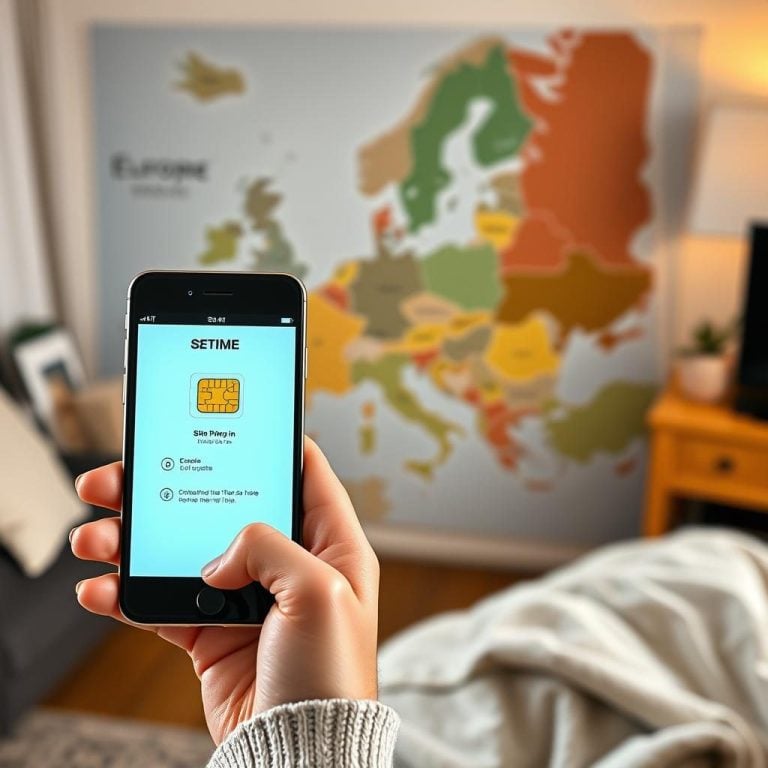
An eSIM is a digital SIM card embedded in your phone. Instead of swapping a tiny plastic chip, you scan a QR code or enter activation details, and a carrier profile installs directly onto your device. Most phones released after 2018 support eSIM — iPhones from the XS onward, Samsung Galaxy S20 and later, Google Pixel 3 and newer, and many others.
What You Need to Buy an eSIM Plan
Here’s the full list of requirements for most eSIM providers offering French numbers:
1. A compatible phone
2. A valid payment method (credit card, debit card, PayPal, or mobile payment)
3. An email address to receive activation instructions
That’s it. No French ID. No French address. No selfie holding your passport. No in-store visit.
How It Works
You choose a plan — typically ranging from a few days to 30 days — that includes data, calls, and texts on a French network. After payment, you receive a QR code. You scan it in your phone’s settings under the cellular or mobile data section. The eSIM profile downloads, and within minutes you have a working French phone number.
Some providers assign you a dedicated French number (+33 prefix) that’s yours for the plan duration. Others provide data-only eSIMs without a phone number, which is useful for internet access but won’t help with SMS verification or calls.
If your primary goal is to have a callable, textable French number, make sure the plan explicitly includes a phone number — not just a data allocation. Providers like those found through EuropeNumber’s temporary france number listings specialize in plans that include dedicated French numbers.
Advantages of eSIM
– No physical SIM to lose or damage
– Activate before you even board the plane
– Keep your home SIM active simultaneously (dual SIM)
– No ID verification beyond payment
– Plans available for as short as a few days
Limitations
– Phone must be eSIM-compatible and carrier-unlocked
– Some very budget phones still lack eSIM support
– Data-only eSIMs won’t come with a phone number
Method 2: Physical Prepaid SIM Cards
The traditional approach. You buy a SIM card either in France (at a carrier store, tabac, or airport kiosk) or online before travel.
Buying In-Store in France
French carriers sell prepaid SIMs (called cartes prépayées) starting around €5-€20 with varying amounts of data and call credit. You will be asked for ID — your passport works fine. You do not need a French ID. An address may be requested; your hotel address is generally accepted.
The downside is the time and hassle. You need to find a store, potentially wait in line, deal with a language barrier, and hope the clerk doesn’t insist on documentation you don’t have. At Charles de Gaulle airport, SIM card shops exist but are often overpriced and understocked.
Buying Online Before Travel
Several international resellers ship prepaid French SIMs to your home address before departure. This avoids the in-store experience but requires advance planning and shipping time. Most online resellers handle the registration on your behalf, so you’re only asked for basic contact info and payment — again, no French ID or address.
Method 3: Virtual Phone Numbers
Virtual numbers give you a French +33 number that routes calls and texts to an app on your phone over the internet. You don’t need any SIM card at all — just a data connection (Wi-Fi or mobile data from any source).
Services like Skype, Google Voice (limited French availability), and various VoIP providers offer this. The setup typically requires only an email address and payment.
Pros
– Works on any phone, tablet, or computer
– No SIM swap needed
– Often very cheap for receiving calls
Cons
– Requires internet connection at all times
– Many French services reject VoIP numbers for SMS verification
– Call quality depends on connection speed
– Not a “real” mobile number in the carrier sense
Virtual numbers are best suited for business use cases — giving clients a local number to call — rather than for travelers who need reliable SMS and voice on the move.
Method 4: Free Anonymous Shared Numbers — And Why to Avoid Them
You’ve seen the websites. “Receive SMS online free!” They display a list of phone numbers from various countries, including France, and show incoming messages publicly on a webpage. Anyone can use these numbers for verification codes.
Here’s the problem: everyone can see every message. If you use one of these numbers to verify a BlaBlaCar account, anyone reading that page sees your verification code. Your account is compromised before you even finish creating it.
Additionally, many online services have blacklisted these shared numbers. Try to verify a bank, payment, or social media account with a known shared number, and you’ll get an error. The number might also stop working at any time — the operator can pull it without notice.
Free shared numbers are unreliable, insecure, and increasingly useless. For anything beyond the most throwaway of signups, they’re not worth the risk. If you need a French number that actually works and stays private, a dedicated temporary france phone number through an eSIM plan is the far smarter path.
Comparing Your Options at a Glance
eSIM Plan: No French ID needed. No address needed. Activation in minutes. Dedicated private number. Best for most travelers.
Physical Prepaid SIM (in-store): Passport required. Hotel address usually accepted. Activation same day. Dedicated private number. Good fallback option.
Physical Prepaid SIM (online): No French ID needed. Ships to home address. Requires advance planning. Dedicated private number.
Virtual Number (VoIP): No ID needed. App-based. Requires internet. May be rejected for SMS verification.
Free Shared Number: No ID needed. Public and insecure. Frequently blacklisted. Not recommended.
Step-by-Step: Getting Your French Number via eSIM
For most readers, this is the route to take. Here’s the process broken down:
Step 1: Confirm your phone supports eSIM. Check your phone’s settings under “Cellular” or “Mobile Network” — if you see an option to add an eSIM or cellular plan, you’re good.
Step 2: Make sure your phone is carrier-unlocked. If you bought your phone through a carrier on a contract, it might be locked. Contact your carrier to unlock it, or check settings. Unlocked phones purchased directly from the manufacturer are always ready.
Step 3: Choose a plan. Look for eSIM plans that explicitly include a French phone number (+33), not just data. Match the plan duration to your trip length. According to ARCEP, France’s telecom regulator, the country has excellent 4G/5G coverage across all major carriers, so network quality is rarely an issue regardless of which underlying network your eSIM uses.
Step 4: Purchase and receive your QR code via email.
Step 5: Scan the QR code in your phone settings. Follow the on-screen prompts. Your eSIM profile will download and install.
Step 6: Set your new French line as the default for calls and texts (or configure it as a secondary line if you want to keep your home number active for certain contacts).
Step 7: Test with a call or text. You’re done.
The entire process takes under 10 minutes and can be completed from anywhere in the world, days or weeks before your trip.
Tips for Choosing the Right Plan
Not all temporary French number plans are equal. Here’s what to look for:
Data allowance: If you plan to use maps, translation apps, and streaming, aim for at least 5-10 GB for a week-long trip. France has widespread Wi-Fi in cafés and hotels, but you don’t want to depend on it.
Call and SMS inclusion: Some plans include unlimited local calls and texts. Others charge per minute or per message. If you’ll be calling French numbers regularly — restaurants, tour operators, car rental desks — unlimited calling saves money and headaches.
Network coverage: France’s four major networks (Orange, SFR, Bouygues Telecom, and Free Mobile) all provide strong urban coverage. Rural coverage, especially in mountainous areas of the Alps, Pyrenees, or central Massif Central, is best on Orange’s network. Check which carrier’s network your eSIM plan uses if you’re heading to remote areas.
Flexibility: Can you top up or extend the plan if your trip runs longer? Some providers offer easy in-app renewals.
Common Mistakes to Avoid
Buying a data-only eSIM when you need a phone number. This is the most frequent error. Data-only eSIMs give you internet access but no callable number. Read the plan details carefully.
Waiting until you land. Airport SIM kiosks are expensive and sometimes sold out. Buy your eSIM before departure.
Assuming your phone is unlocked. Carrier-locked phones can’t use third-party eSIM profiles. Check before you buy.
Using a free shared number for important accounts. Your verification code will be visible to everyone. Don’t risk it.
Forgetting to set the new line as default. If your phone still routes calls and texts through your home SIM, you’ll get billed international rates.
Frequently Asked Questions
Can I get a French phone number without a French ID?
Yes. eSIM providers and online SIM resellers typically require only a valid payment method and email address. No French ID, passport scan, or local address is needed. In-store purchases in France require a government-issued ID (any nationality), but not specifically a French one.
Do I need a French address to activate a French SIM card?
Not if you purchase through an international eSIM provider or online reseller. In-store purchases may ask for an address, but a hotel or Airbnb address is generally accepted. Online eSIM activation does not require any address at all.
How quickly can I get a temporary French phone number?
With an eSIM plan, you can have a working French phone number in under 10 minutes. You purchase online, receive a QR code by email, scan it with your phone, and the number activates immediately.
Will a temporary French number work for SMS verification?
A dedicated French number from an eSIM plan or prepaid SIM works for most SMS verifications, including French services like SNCF, BlaBlaCar, and Doctolib. Free shared online numbers are frequently blacklisted and unreliable for verification purposes.
Can I keep my home number active while using a temporary French number?
Yes. Most modern smartphones support dual SIM functionality, allowing you to keep your home SIM active alongside an eSIM. You can choose which line to use for calls, texts, and data independently.
Are free online French phone numbers safe to use?
No. Free shared numbers display all incoming messages publicly on a website, meaning anyone can see your verification codes. These numbers are also commonly blacklisted by banks, social media platforms, and other services. A dedicated temporary French number is far more secure and reliable.