Paris Fashion Week: Why You Need a +33 Number
Why a French Number Matters More at Fashion Week Than Anywhere Else
Paris in show season runs on short messages. A PR assistant texts you a venue change forty minutes before the show. A driver you booked through a French dispatch app pings you from a side street off Rue Saint-Honoré. A showroom sends a one-time code before it will let you into its appointment portal. None of that arrives reliably on a data-only travel SIM, because none of it is designed for one. It is designed for a French mobile number.
Most travellers to France never notice the gap. They land, they use maps and messaging apps, they go home. Fashion Week is different because the entire week is coordinated by people who assume you have a local line – and who will move on to the next name on the list if they cannot reach you in ten minutes. That is the practical case for carrying a real +33 number for the duration of the season, not just mobile data.
TL;DR
Paris Fashion Week logistics run over SMS and voice, not email. A data-only eSIM handles maps and Instagram but cannot receive a French text, take a call from a French landline, or verify a French app account. A europe esim with number gives you a genuine +33 line plus data on the same phone, alongside your home SIM, so PR desks, drivers, showrooms and hotel concierges can all reach you. Set it up before you fly, share the number in your show RSVPs, and keep your home number active for banking codes.
What Actually Breaks Without a +33 Number
The failures are small and cumulative rather than dramatic. Each one costs you fifteen minutes, and fifteen minutes is the difference between the second row and standing at the back.
Show confirmations and venue changes
Paris venues change. A show scheduled for a courtyard in the Marais moves indoors because of rain, or a slot shifts by ninety minutes because the previous house ran long. Press offices push these updates by SMS to their confirmed list. If your number is a foreign one that has been unreachable since you landed, you either get the message late or you do not get it at all. Some agencies will not even accept a non-French number on the RSVP form.
Drivers, couriers and deliveries
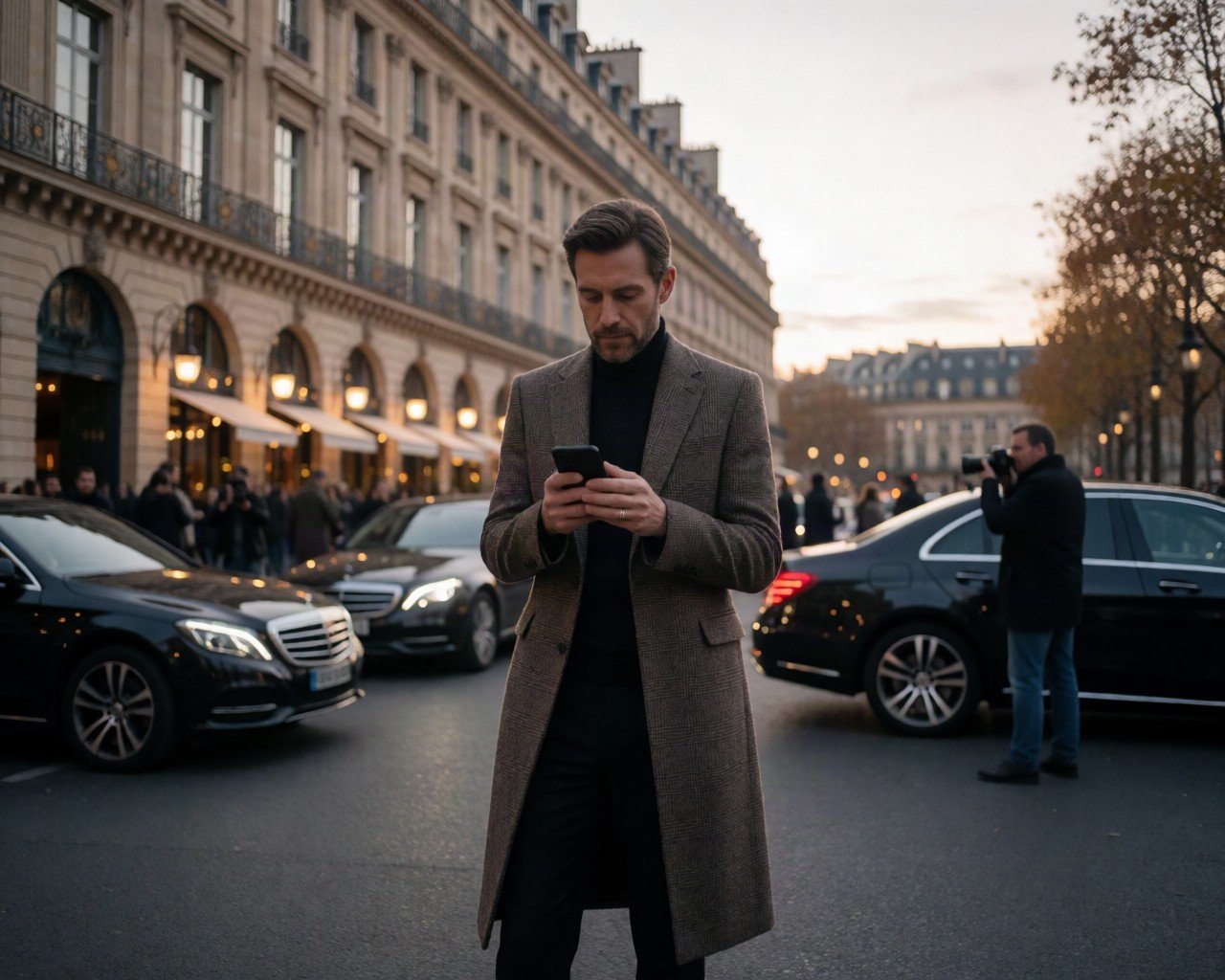
Ride apps and courier services in France send driver contact by text and expect a callable local number when the driver cannot find you. During show season the streets around Palais de Tokyo, the Tuileries and Place Vendôme are closed or gridlocked, and drivers routinely stop two streets away and text. A French line means the driver’s call actually connects instead of dropping into an international dial that their app blocks.
App and account verification
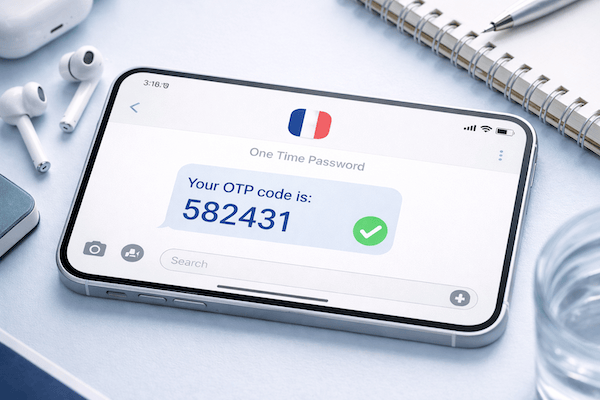
French transport, banking, delivery and appointment platforms verify by SMS to a domestic number. Ticketing for regional trains, some hotel check-in systems, and most showroom booking tools fall into this category. A verification code sent to a +33 number arrives in seconds. Sent to a number that is roaming badly or switched off to avoid charges, it arrives never.
Being callable at all
Fashion Week still runs on phone calls. Stylists call. Production coordinators call. A casting director calls twice and then calls someone else. Voice over an unstable roaming connection, or voice that costs three euros a minute, changes how you behave – you stop picking up, and that is the worst outcome of the week.
The Season Calendar and Who Needs a Local Line
Paris hosts several distinct weeks across the year. Womenswear ready-to-wear sits in late February to early March and again in late September into early October. Menswear lands in January and June. Haute couture takes January and July. The official schedules are published by the Fédération de la Haute Couture et de la Mode, and each of those weeks brings the same logistical pattern: dense scheduling, last-minute changes, and coordination handled almost entirely by mobile.

France eSIM with a real +33 number
Unlimited calls and SMS, data included. QR code by email — active in minutes. Official Bouygues Telecom partner.
20GB · €22,90 ›30GB · €29,90 ›60GB · €34,90 ›
★ 5.0 on Google · 12 months to activate · 3-month refund guarantee
Who genuinely benefits from a French number rather than data alone:
Buyers and wholesale teams. You are running eight to twelve showroom appointments a day across the 1st, 3rd and 8th arrondissements. Every one of those showrooms will want a number to confirm, reschedule or tell you the door code.
Press and editors. Seating is confirmed and revised by text, often the morning of the show. A local number puts you on the reachable list rather than the maybe list.
Photographers and crew. Location changes, permit issues and gear couriers all resolve over SMS with French dispatchers who will not dial an overseas number.
Brand and PR staff. If you are on the other side and coordinating guests, you need a number the venue, the caterer and the security team will actually ring.
Guests and clients. Even without a professional role, a local line makes restaurant reservations, taxi bookings and store appointments dramatically less friction-heavy. Paris restaurants during show season confirm by text and release the table if nobody replies.
Data-Only eSIM Versus an eSIM With a Real Number
This is the distinction most travellers miss until it costs them. The majority of travel eSIMs sold for Europe are data-only. They give you gigabytes and nothing else – no phone number, no SMS capability, no voice. They are perfectly good for a holiday where everything runs through internet-based messaging.

Europe eSIM with a real +33 number
One eSIM across 39 European destinations. Unlimited calls and SMS, data included. QR code by email — active in minutes.
20GB · €19,90 ›30GB · €29,90 ›60GB · €40,00 ›
★ 5.0 on Google · 12 months to activate · 3-month refund guarantee
A europe esim that includes a genuine +33 line is a different product. You get a French mobile number that can send and receive standard SMS, take and make voice calls, and satisfy the verification checks that French services run. The data sits on the same profile, so you are not juggling two plans.
The practical test is simple. Ask whether a French landline could ring you. If the answer is no, you have a data plan, not a phone line, and Fashion Week will find the edges of that quickly.
Why not just use your home number roaming?
You can, and for short trips it is sometimes fine. Three problems show up during show season. Cost is the obvious one if you are outside the EU roaming area – inbound calls, outbound calls and per-message charges compound fast across a ten-day trip. Second, French contacts frequently will not dial an international number; agency phone systems and dispatch apps often block or fail on them. Third, you end up rationing usage, which is precisely the wrong instinct in a week where being instantly reachable is the whole point.
Why not buy a French SIM on arrival?
You can do that too, but it costs you a morning. French prepaid activation typically requires ID, sometimes a French address, and a trip to a store that will be busy. Doing that on your first day in Paris during show season is time you do not have. An eSIM you activate before you leave home skips the queue entirely.
Your allocated line will start 06 or 07, and the difference between the 06 and 07 prefixes is purely which block the operator had spare.
Setting Up Before You Land at CDG
The whole point of an eSIM is that the setup happens at your desk, not in a phone shop on Boulevard Haussmann. A sensible sequence:
Check your phone is eSIM capable and carrier unlocked. Most iPhones from the XS onward and most recent Pixel, Samsung and Motorola flagships support eSIM. Carrier lock is the usual blocker – resolve it with your home operator before you travel, not after.
Buy and install a week or two ahead. Install the profile early and leave it switched off until you land. Installing over hotel wifi in Paris works, but installing over your own home connection removes a variable.
Label your lines. On both iOS and Android you can name each line. Set the French line as your default for calls and SMS while you are in France, and keep your home line active for data-off use so bank codes still arrive.
Put the +33 number into your RSVPs. This is the step people skip. If the press office has your home number on file, the local line achieves nothing. Update it in your show confirmations, your showroom appointment forms, your hotel booking and your driver apps before you fly.
Set your voicemail greeting. A short greeting in English is fine, but a bilingual one signals you are contactable and reduces the chance a French caller hangs up assuming a wrong number.
If you are unsure how to write your new line on a call sheet, the +33 number format drops the leading zero when quoted internationally.
How Much Data You Will Actually Use
Fashion Week is a heavy data week even if you think of yourself as a light user. Maps run constantly as you cross the city between venues. Photos and short clips upload from every show. Video calls back to a head office or a client happen between appointments. Livestreams and lookbooks get watched in transit.
As a working figure, budget three to five gigabytes per day if you are shooting and posting, and one to two gigabytes if you are mostly navigating and messaging. Over a nine-day week that is a meaningful plan size, so choose based on your real behaviour rather than the smallest tier. Public wifi at venues is unreliable by design – hundreds of people, one access point, a lot of uploading.
Transit apps are worth a mention because they lean on both data and SMS. If you are moving by métro and RER, the Île-de-France Mobilités tools handle tickets and live disruption alerts, and account setup on French platforms frequently expects a domestic number.
Coverage Beyond Paris
Very few people fly to Paris and fly straight home. The season chains together – Milan before or after, London on the other side, sometimes Copenhagen or Florence bolted on. A Europe-wide plan matters here because a French-only SIM stops being useful the moment your train crosses into Italy.
Look for a plan that keeps your number and your data working across the EU without a separate purchase in each country. A europe esim with number that covers the whole bloc means the +33 line you handed out in Paris still rings you in Milan, and the buyers who saved your contact in September can still reach you in February.
The same logic applies to day trips. A showroom in Antwerp, a factory visit in northern Italy, a client meeting in Amsterdam – all of them break a single-country plan and none of them break a regional one.
Mistakes That Cost People Shows
Activating on the plane. Install the profile at home. Activation can need a working connection, and airport wifi at CDG during a busy week is not the place to discover a problem.
Turning off the home line entirely. Keep it enabled for SMS with data roaming disabled. Banking and two-factor codes still go to your home number, and being locked out of a card payment in Paris is worse than a small roaming fee.
Assuming everyone will use WhatsApp. French agencies, drivers and venues often will not. They send a standard SMS and expect an answer.
Not testing before you need it. Once the line is live, send yourself a text and make one short call. Two minutes of testing on day one prevents a silent phone on day three.
Buying data-only and hoping. If the listing does not explicitly say it includes a phone number with SMS and voice, it does not. Read the product description rather than the headline price.
The Short Version
Paris Fashion Week rewards people who are easy to reach. A local +33 number is not a luxury add-on for that week, it is the piece of infrastructure that everything else hangs on – seating confirmations, drivers, showroom access, restaurant tables and the calls you did not know were coming. Pair it with enough data to cover a genuinely heavy week, set it up before you fly, and put the number where the people trying to find you will actually look. A europe esim with a real French line does all of that on the phone already in your pocket.
Frequently Asked Questions
Do I really need a French +33 number for Paris Fashion Week?
If you are attending shows, running showroom appointments or coordinating drivers and crew, yes. Press offices, dispatch apps and French booking platforms send confirmations, venue changes and verification codes by SMS to domestic numbers, and many will not dial an international one. If you are visiting purely as a tourist, a data-only plan may be enough.
What is the difference between a data-only eSIM and an eSIM with a number?
A data-only eSIM gives you mobile internet with no phone number, so it cannot receive standard SMS or take voice calls. An eSIM with a number includes a genuine mobile line – in this case a French +33 number – that can send and receive texts, make and take calls, and pass SMS verification on French services. The data is included on the same profile.
Can I keep my home number active at the same time?
Yes. Modern eSIM-capable phones run two lines at once. The usual setup is to keep the home line enabled for SMS with data roaming switched off, so banking and two-factor codes still arrive, while the French line handles calls, texts and data in Europe.
How much mobile data should I budget for Fashion Week?
Budget three to five gigabytes a day if you are shooting and posting content, and one to two gigabytes a day if you are mainly navigating and messaging. Venue wifi is typically overloaded, so plan to rely on mobile data across the full week rather than topping up on free connections.
Will the same eSIM work in Milan and London after Paris?
A Europe-wide plan will, which is why it is the sensible choice during show season. Your number and data keep working as you move between countries, so contacts who saved your details in Paris can still reach you elsewhere. A France-only SIM stops being useful the moment you cross a border.
When should I install and activate the eSIM?
Install the profile at home a week or two before you travel over a connection you trust, then leave it switched off until you land in France. Once it is live, send a test text and make a short call, and update your RSVPs, hotel booking and driver apps with the new number so people can actually reach you on it.