TL;DR: French Phone Number
A French phone number is a 10-digit number starting with 0, dialled internationally with the country code +33. The first two digits tell you what kind of number it is: 01–05 are landlines, 06 and 07 are mobiles, and 09 is a VoIP (internet) number. If you need a French number that works for calls, SMS and verification codes, a real +33 mobile number is far more widely accepted than a VoIP or app-based number.
What Is a French Phone Number?
A French phone number is a 10-digit number managed by ARCEP, the French telecoms regulator. Within France, every number is written and dialled with a leading 0 — for example 06 12 34 56 78. From outside France, the leading 0 is replaced by the international country code +33, so the same number becomes +33 6 12 34 56 78. Every French number, whether landline, mobile or VoIP, follows this same closed 10-digit plan.
French Phone Number Format
French numbers are always written in five pairs of digits separated by spaces: 0X XX XX XX XX. This pairing is a strong national convention — you will see it on business cards, shopfronts and websites across France. In international format the number is written +33 followed by nine digits (the 10 digits minus the leading zero): +33 X XX XX XX XX.
What the First Digits of a French Number Mean
The first pair of digits identifies the type of number and, for landlines, the region:
- 01 — Landlines in Paris and the Île-de-France region
- 02 — Landlines in North-West France (Nantes, Rennes, Rouen, Orléans)
- 03 — Landlines in North-East France (Lille, Strasbourg, Reims, Dijon)
- 04 — Landlines in South-East France (Lyon, Marseille, Nice, Grenoble)
- 05 — Landlines in South-West France (Bordeaux, Toulouse)
- 06 and 07 — Mobile numbers, issued with a SIM or eSIM by a mobile network
- 08 — Special-rate numbers: freephone (0800) and premium-rate services
- 09 — Non-geographic VoIP numbers, typically supplied with internet boxes and online calling services
This is the quickest way to tell a real French mobile from a VoIP number at a glance: a genuine mobile always starts with 06 or 07, while 09 numbers are internet-based.
How to Call a French Phone Number from Abroad
Dial your international access prefix (or simply +), then 33, then the French number without its leading 0. To call 06 12 34 56 78 from another country, dial +33 6 12 34 56 78. From most mobile phones you can simply save the number in +33 format and it will work both inside and outside France.
How to Dial Within France
Inside France, dial all 10 digits including the leading 0 — for example 06 12 34 56 78 — whether you are calling across the street or across the country. There are no separate area codes to add or drop. To call another country from France, dial 00 (or +) followed by that country's code.
How French People Say Phone Numbers
French numbers are spoken in double digits, matching the way they are written: 06 12 34 56 78 is said "zéro six, douze, trente-quatre, cinquante-six, soixante-dix-huit". If you are learning French, practise numbers up to 99 — French speakers rarely read a phone number digit by digit, and asking someone to repeat "chiffre par chiffre" (digit by digit) is the polite fallback.
Real French Phone Number vs VoIP Number: What's the Difference?
A real French phone number is a 06 or 07 mobile number issued by a mobile network operator together with a physical SIM or eSIM. It lives on the French mobile network, so it registers on carrier databases exactly like a local resident's number. A VoIP number is delivered over the internet instead of the mobile network — either a French 09 number, or a virtual number from an online app. Both can look French, but they behave very differently when services check them.
Why the Difference Matters: SMS Verification and 2FA
Banks, messaging apps, delivery platforms and government portals routinely check the line type behind a number before sending a one-time passcode. Many block VoIP and virtual numbers outright — WhatsApp, banking apps and ticketing sites are common examples. A real +33 mobile number registered on the mobile network passes these checks at a far higher rate, which is why it is the safer choice for SMS verification, two-factor authentication and account sign-ups in France and across Europe.
Real +33 Mobile vs VoIP at a Glance
- Prefix: Real mobile numbers start 06/07; VoIP numbers are usually 09 or app-issued virtual numbers
- Network: Real numbers run on French mobile networks; VoIP runs over any internet connection
- SMS and OTP codes: Real mobile numbers receive verification SMS reliably; VoIP numbers are frequently rejected
- Calls: Both make calls, but VoIP quality depends entirely on your internet connection
- Acceptance: Hotels, banks, ride-share and delivery apps trust 06/07 numbers; many refuse VoIP
- Setup: A real number needs a SIM or eSIM; VoIP only needs an app and an account
When a VoIP Number Is Enough
VoIP numbers are inexpensive and fine for casual outbound calling, receiving calls on a laptop, or giving out a secondary contact line. If you only need to make internet calls and never need SMS codes or local verification, a VoIP number can do the job.
When You Need a Real French Number
Choose a real +33 mobile number when you need SMS verification codes, a number French contacts and businesses will call back, sign-ups for French services such as delivery, transport and ticketing apps, or a number that simply works everywhere a local's does. For travellers, students, cruise passengers and business visitors, a real mobile number removes the most common friction points of being in France without a French number.
How to Get a French Phone Number
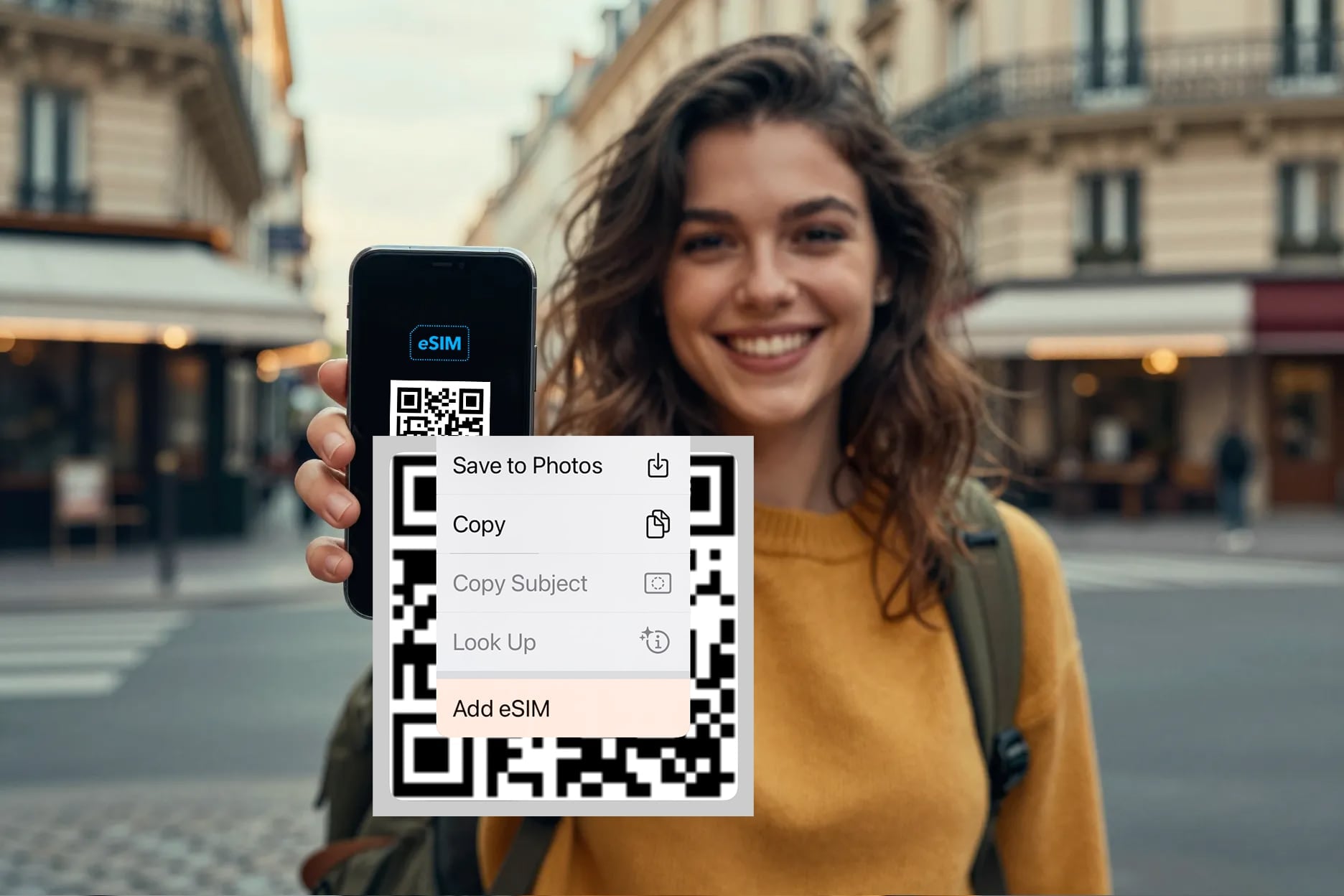
There are three main routes. A contract or prepaid SIM from a French carrier gives you a real number but usually requires ID, a French address, and often a store visit. A VoIP app gives you an instant number but with the acceptance limitations above. The third option combines the best of both: an eSIM with a real +33 mobile number, delivered by email and installed by scanning a QR code — no store visit, no contract, and no French paperwork required.
French Phone Numbers and Dual SIM
Modern iPhones, Samsung Galaxy and Google Pixel phones support dual SIM, so a French number on eSIM can run alongside your home SIM. You keep receiving calls on your usual number while using the French +33 number for local calls, SMS and verification — no swapping SIM cards, no second handset.
Using a French Number Beyond France
A French +33 mobile number doesn't stop working at the border. Under EU roam-like-at-home rules, a French mobile number continues to work across the European Union, so one +33 number can cover a multi-country itinerary for calls, SMS and verification.
Key Takeaways on French Phone Numbers
- French numbers have 10 digits starting with 0, written in five pairs, dialled internationally as +33 without the leading 0
- The first digits reveal the type: 01–05 landline, 06/07 mobile, 08 special-rate, 09 VoIP
- Real 06/07 mobile numbers are accepted for SMS verification and 2FA where VoIP numbers are often rejected
- An eSIM with a real +33 number is the fastest way to get a French number without contracts or paperwork
French Phone Numbers, Explained
Whether you're saving a contact, filling in a form, calling a hotel in Paris, or deciding what kind of number you need for a stay in France, the rules are consistent: 10 digits starting with 0 inside France, +33 without the zero from abroad, written and spoken in pairs. The first two digits tell you what you're dealing with — a regional landline (01–05), a genuine mobile (06/07), a special-rate line (08), or an internet-based VoIP number (09). Keep that map in mind and French numbers become easy to read, dial and verify. And if a service refuses your number or an SMS code never arrives, the line type is usually the reason: verification systems trust real French mobile numbers on the mobile network far more than VoIP or app-based alternatives.














































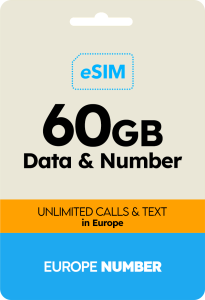 France eSIM 60GB + French Phone Number